
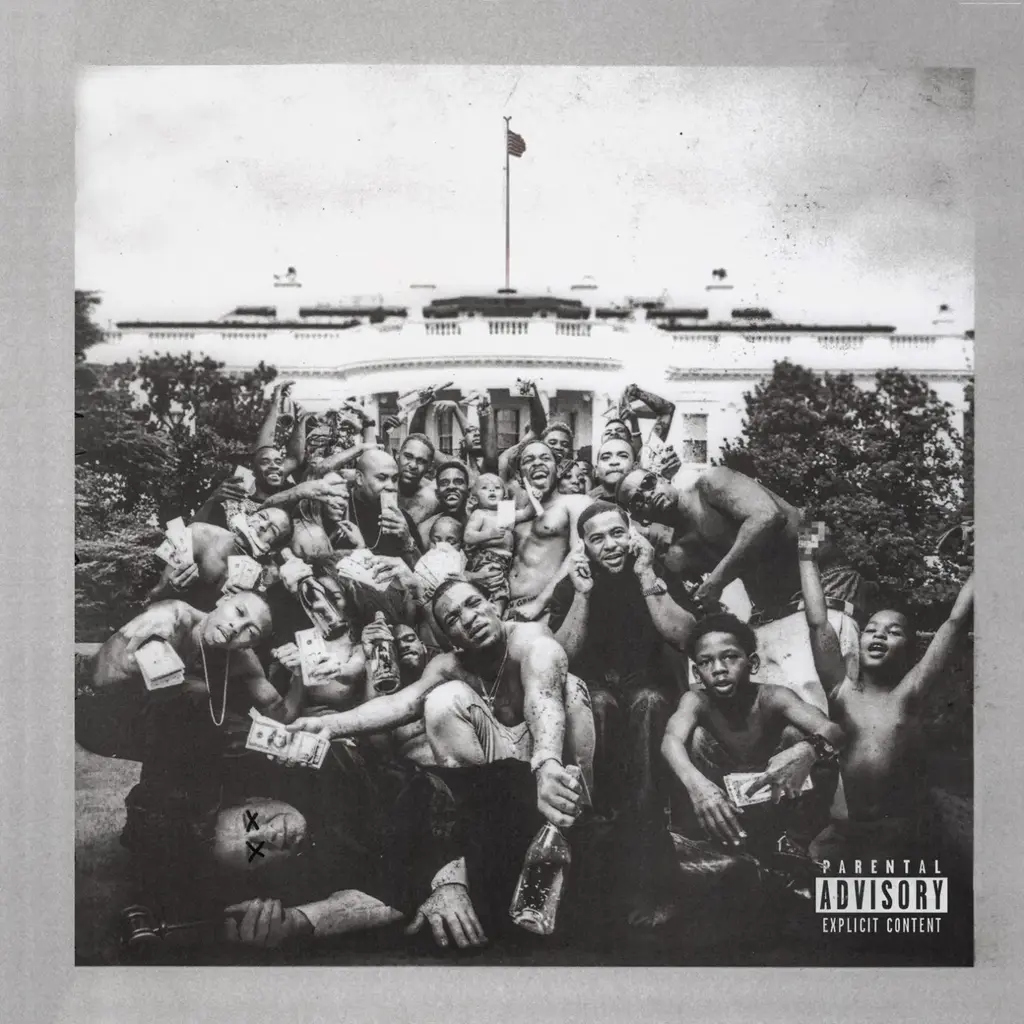
I’ve never heard the album before. It’s one of those albums critics drool over, fans dissect like it’s the Zapruder film, and casual listeners either worship or fall asleep to, depending on how much caffeine they’ve had. It’s ambitious, jazzy, political, messy, and longer than some marriages. Kendrick throws everything at the wall here—funk, soul, free jazz, rap, spoken-word skits, voicemail messages, hotel screaming, and approximately 37 writers per track. It’s less an album and more a United Nations summit set to a beat.
So let’s dive in track by track, through the brilliance, the bloat, the penis jokes, and the moments of actual genius, and see if To Pimp A Butterfly is the masterpiece people claim—or just an extremely long group project where half the team forgot the assignment.
The album kicks off with fake vinyl crackle, which is an artistic choice right up there with releasing an album exclusively on floppy disks. Nobody who actually owns records wants them to sound like garbage. You think audiophiles are out there saying, “Hey, let’s scratch this Miles Davis LP so it sounds authentic”? No. They’re cleaning their records with brushes made of unicorn hair and distilled tears. So thanks, Kendrick, for starting this ambitious masterpiece with “shittier than MP3” sound quality.
Once you survive that, a doo-wop intro drops in all sweet and nostalgic, like you’ve been transported back to a prom in 1958 where everyone is high on malted milkshakes. But then BOOM—bass and drums crash the party like drunk cousins. And damn, they sound good. The groove is tighter than your jeans after Thanksgiving dinner, and the harmonies are stacked high enough to reach the International Space Station. This thing moves.
The lyrics? Oh boy. Pick a topic out of a hat: sex, money, indulgence, paranoia, random flexing. It’s basically like flipping channels at 3 a.m. and landing on BET, HBO After Dark, and the Home Shopping Network all at once. The song splinters into different breakdowns and sections every thirty seconds, which makes sense because there are, like, seventeen writers credited. No wonder it sounds like a compilation album trapped inside one track.
And just when you think it can’t get weirder, George Clinton wanders in sounding like he woke up in the wrong decade. His vocals pop in and out, ragged and otherworldly, like a funky wizard casting spells over the mix. He’s equal parts grandpa and extraterrestrial, and it works because—let’s face it—George Clinton always works. Overall, “Wesley’s Theory” is chaotic, indulgent, and messy as hell, but it’s also funky as hell. Which is basically this whole album in miniature.
This one comes blasting in like a jazz combo on acid. Saxophones squawk, drums tumble down the stairs, pianos dart around like caffeinated squirrels—it’s basically John Zorn running into Charles Mingus at a demolition derby. And just as you’re thinking, “Hey, this might actually be the coolest free-jazz detour on a hip hop record ever,” in comes some random woman yammering about nothing. And I mean nothing. She’s not even saying anything profound, just nagging like the voicemail your dentist leaves when you miss an appointment.
Then Kendrick barges in shouting, “This dick ain’t free!” which is one of those lines that you really have to sit with. Because on one hand, yeah, thanks for the heads-up, Kendrick. On the other hand, what the hell, man? We just had a perfectly good jazz freak-out happening, and now it’s a penis TED Talk. The tonal whiplash is strong with this one.
Musically though? It’s on point. The band is shredding, the energy is high, and if you can ignore the lyrical sideshow, it feels like someone snuck a killer Blue Note session onto the album. The problem is, you can’t ignore it, because every time you start grooving, Kendrick yells about his dick again. Imagine John Coltrane pausing A Love Supreme to announce, “This sax ain’t free!” Same vibe.
So yeah, it’s bold, it’s messy, and it’s confusing. Half genius, half comedy sketch, half middle-school locker room. (Yes, I know that’s three halves, but this song deserves broken math.)
Now THIS one. The bass drops in like Godzilla’s footsteps, shaking your speakers until your neighbors file a noise complaint. The groove is so thick you could spread it on toast. Real drums crash in, funky guitar scratches, and suddenly you’re wrapped in a warm, angry, funky hug. It’s basically the closest thing this album has to a radio-friendly banger, and it bangs hard.
Lyrically? Kendrick is mad. He’s mad about ghostwriters, mad about people not respecting him, mad about the haters. Which would be fine—except there are seven writers credited on this track. Seven. That’s like complaining about fast food while standing inside a Taco Bell with a Crunchwrap in your hand. The irony is delicious.
Still, the attitude is sharp. He brags about making it out of his neighborhood, and he throws shade at the folks who stayed behind. Which… okay? That’s great for you, Kendrick, but do I personally care about whether your old block respects you? Not really. It’s like listening to your friend complain about high school beefs twenty years later. Bro, let it go.
But here’s the thing: the music is so damn good you almost don’t care what he’s saying. The groove carries everything, and Kendrick’s delivery is passionate enough to sell it. It’s not perfect—better lyrics could’ve made it legendary—but as is, it’s a sweaty, swaggering funk workout. Put this on at a party and no one’s complaining. Except maybe the haters.
And now the tonal roller coaster veers off into confusion again. Kendrick starts rapping about being trapped in the ghetto, which is weird because literally one track ago, he was bragging about escaping the ghetto. Consistency isn’t exactly this album’s strong point.
The music? More jazzy touches, more layered production, but the lyrics bounce all over like a drunk pinball. There are four writers and two producers, which explains why it sounds like three separate songs fighting for dominance. One minute it’s introspection, the next it’s braggadocio, then suddenly we’re back to anatomy class. Seriously, why does this album circle back to dick references like it’s trying to set a Guinness World Record?
To be fair, there are moments where the groove locks in and you think, “Yes, this is it, this is why people love this record.” The problem is, those moments vanish as quickly as they arrive, replaced by tangents, skits, or another chorus that feels tacked on. It’s like channel surfing when every channel is Kendrick Lamar and none of them stick to the same plotline.
Overall, “Institutionalized” isn’t bad—it’s got energy, it’s got style—but it’s too scattered to leave a mark. It feels less like a finished song and more like a collage of good ideas Kendrick couldn’t decide between, so he just kept them all.
Another track, another “let’s start with people TALKING” intro. At this point, the album has more small talk than my Aunt Carol at Thanksgiving. This time it’s accompanied by some random sci-fi bleeps, which makes me feel less like I’m about to hear a groundbreaking hip-hop song and more like I accidentally tuned into the SyFy channel’s reboot of Lost in Space.
Then the actual song kicks in, and what do we get? Smooth, adult-contemporary jazz funk. Like the kind of thing you’d hear playing quietly in the background at a Chili’s while waiting for your fajitas. To be fair, the hook is really nice—it’s catchy, it flows, it’s polished. But the lyrics? Esoteric rambling about “walls” that have apparently seen a lot of stuff. Are these metaphorical walls? Literal walls? The walls of his house? His mind? The McDonald’s bathroom at 2 a.m.? Hard to say.
Musically, though, there’s plenty to like. The groove is steady, the production is slick, and the layers are tasty enough to chew on. But then—because apparently Kendrick can’t help himself—the track ends in another skit, this time with people screaming in a hotel room. I get it, Kendrick. You’re conflicted. You’re screaming. You’re in a hotel. But maybe let the music do the heavy lifting once in a while?
So, “These Walls” is both a high point and a head-scratcher. Gorgeous production, memorable chorus, but bogged down by unnecessary theatrics. Imagine Miles Davis playing “So What” and then stopping halfway through to act out a phone call with his landlord. That’s where we’re at.
This one starts with more jazzy chaos, which by now is basically the house style of To Pimp A Butterfly. Echoed screams hover above the mix like horror movie sound effects, while the band cooks up a smoky groove that could easily stand alone without a single word on top. For a moment, you think: finally, he’s gonna let the music breathe.
Then the refrain hits: “Loving you is complicated.” Over and over and over. And then rapid-fire raps about heartbreak, betrayal, and general misery. Which is fine—heartbreak makes for great art—but the delivery feels more whiny than powerful. Like that friend who keeps drunk-texting their ex and then asking you for advice they won’t take.
The breakdown is particularly rough: Kendrick, half-crying, half-rapping about how much someone wronged him. It’s raw, sure, but also kind of exhausting. You want to hand him a glass of water and say, “Hey man, maybe take a nap and come back to this later.” Instead, he just keeps repeating the refrain until it’s hammered into your skull.
Ah yes, the anthem. The one everyone points to as the “uplifting centerpiece” of the record. And to be fair, it is catchy. The bass is tight, the drums are punchy, the sax squeaks in with jazzy flourishes, and Kendrick’s delivery has urgency. It’s got energy, it’s got hooks, and it’s easily one of the most accessible tracks on the album.
But holy hell, those vocoder harmonies. The keyboard-triggered vocal effects sound like they were borrowed from a 1980s Casio demo tape. It’s hard to feel inspired when the background sounds like the intro to a Sega Genesis game. Every time they pop up, I’m yanked out of the groove and dropped into RadioShack circa 1987.
Thankfully, Pharrell’s fingerprints are all over the production, and that’s what saves it. His knack for layering beats and hooks keeps the whole thing afloat. Without him, “Alright” might have drowned under its own cheesy vocal gimmicks. With him, it becomes the kind of song that people chant at protests and rallies—which, let’s be real, is a hell of a legacy.
So yeah, “Alright” earns its hype, even if it leans on Pharrell like a crutch. Inspirational lyrics, tight groove, unfortunate 80s voice effects. It’s like eating a delicious steak dinner while someone insists on squirting canned cheese on top. Still good, just harder to take seriously.
We open with some fake-sounding keyboard harmonies and heavy breathing. Which, for the record, is never the ideal way to start a song unless you’re a stalker in a horror movie. It’s all “ooh spooky atmosphere,” but really it just makes me think Kendrick accidentally left his mic on while jogging up a flight of stairs.
Then the talking starts. Of course it does. At this point, the album should just be called To Pimp A Monologue. More conversations about conflicted feelings, more characters nobody asked for. It’s not that the themes aren’t important—it’s just that constant skits over otherwise good music make it feel like the soundtrack to an unfinished Broadway musical.
But here’s the twist: this interlude actually kinda works. The layered vocals sound sharp, almost hypnotic, and the rhythm is this mellow cicada-like pulse that feels both alien and soothing. Only two writers are credited, which explains why it feels focused instead of Frankensteined together from six different ideas. And the dreamy, 70s-soul fadeout? Chef’s kiss. For once, Kendrick had a plan, stuck to it, and followed through.
If only the album had more moments like this—songs that build an actual mood without needing a skit stapled on the end. “For Sale?” feels like a fully thought-out idea in a sea of ADD. Still too much talking, but hey, small victories.
Seven writers. That’s not a song, that’s a group project. You half-expect to see a bibliography at the end. Still, the track begins mellow, riding on a steady, almost sleepy groove, with Kendrick rapping about the challenges he overcame. Childhood struggles, lessons learned, the whole “I made it out, I’m better for it” package. On paper, it’s inspiring.
But then it takes a left turn into braggadocio. Suddenly, Kendrick’s not just telling his story—he’s reminding you every thirty seconds that he’s mastered life, the game, the art, everything. It goes from heartfelt to humblebrag to full-on LinkedIn post real quick. By the third verse, you’re expecting him to say, “Also, I’m very proficient in Excel spreadsheets.”
Musically, it’s smooth, it’s layered, and it’s got a warm analog feel. But lyrically, it never quite lands. Instead of being profound, it veers into “listen to how awesome I am” territory. Which is fine, but not for seven writers. Seven people got together to produce… this?
And I can’t shake the comparison: this sounds like a poor man’s Black Messiah by D’Angelo. The production is solid, the instrumentation classy, but the lyrics don’t have the same depth. It’s like Kendrick borrowed D’Angelo’s outfit but forgot to bring the swagger.
Now here’s a weird one. It starts with a funky beat—tight bass, warm keys, drums snapping nicely. For about thirty seconds, you think, “Yes, this is gonna be a highlight.” Then: a skit about voicemail. Because why not? Nothing says “timeless hip-hop” like a fake voicemail from someone who never picks up the phone.
When the rapping kicks in, it’s rapid-fire and aggressive, but the content? Tired. Endless N-word repeats (again), endless “look at me” boasts, endless callbacks to, yep, dicks. By now, it feels less like a theme and more like an obsession. If this album were a freshman English essay, the teacher would’ve written “try some variety in your word choice” in red ink all over it.
The music itself is repetitive, slower than it should be, and just kind of plods along while Kendrick spits bars over the top. It’s got energy, but not momentum. The difference is important. This is like a car revving its engine in the driveway but never actually going anywhere.
And then, the cherry on top: another “conflicted” skit to close it out. The talking, the rambling, the 90s-style “let’s pretend we’re making a concept album with comedy sketches” vibe—it’s played out. This track proves Kendrick’s a great rapper, but also that someone needed to cut half this fluff before pressing “record.”
Ah, finally—the moment where Kendrick goes full Black Messiah cosplay. This track is so close to D’Angelo’s style it might as well be called To Pimp A Bootleg. The mellow horns sneak in and out like polite dinner guests, the groove is slow and syrupy, and everything is slathered in a kind of faux-vintage glow. Honestly, if you played this blind for me, I’d probably accuse Questlove of being in the room.
The concept is actually decent: a meditation on greed and morality framed through an encounter with a homeless man. It should hit hard, but the delivery ends up feeling a little too polished, a little too academic. Like Kendrick was writing a philosophy paper and forgot to turn it in, so he just rapped it instead.
Ron Isley shows up and lends his voice, which gives the track a welcome layer of texture. He sounds smooth and weary, like a glass of brandy poured over crushed velvet. Honestly, he saves the thing from floating away into derivative territory. Without him, this might have just been “D’Angelo karaoke night.”
In the end, it’s a pretty track, it’s a thoughtful track, but it’s not groundbreaking. If you want this vibe done perfectly, you still have to go to Black Messiah. This is good—but it’s “cover band good.”
Hallelujah! A track that doesn’t begin with someone talking about flies, voicemails, or their cousin’s landlord’s dog. “Complexion” slides in smooth, with a mellow backdrop that lets the message take center stage. And for once, the message is crystal clear: your skin color doesn’t define your worth. Boom. Simple. Strong. Universal.
The production here is restrained, almost minimalist. The groove is light and airy, the percussion taps gently, and the focus is squarely on the lyrics. There’s even a guest verse from Rapsody, which feels perfectly chosen—her delivery sharpens the song’s core theme instead of muddying it. It’s one of the few moments on the album where Kendrick sounds focused, not scattered.
It’s also refreshing because, unlike half the record, it doesn’t feel like it’s trying to be three different songs at once. No jarring tonal shifts, no sudden breakdowns into comedy skits, no voice acting. Just one clear idea, executed cleanly. Which, given how all over the place this album usually is, feels almost revolutionary.
Does it sound like another D’Angelo B-side? Yeah, kinda. But this time it doesn’t matter, because the message is strong enough to carry it. If Kendrick had leaned more in this direction, the album would feel tighter and way more impactful. As it stands, “Complexion” is a highlight—proof he can land a theme without drowning it in theatrics.
Now THIS is what I’m talking about. No meandering, no rambling, no twenty-seven writers throwing darts at a lyric sheet. Just a monster beat and Kendrick going nuclear. The drums snap like a bear trap, the bass rumbles like an earthquake, and the whole track feels like a war march. It’s aggressive, it’s raw, and it’s the first time in a while you feel like Kendrick isn’t holding anything back.
Lyrically, this is the most powerful thing on the album. It’s confrontational, angry, and unapologetic. He rips into racial hypocrisy and systemic injustice with the kind of intensity that makes you sit up straight and pay attention. And the best part? For once, he doesn’t undercut it with a skit about flies buzzing in the kitchen or some random voicemail. It’s just fury, unfiltered.
Of course, there are EIGHT writers credited. Which makes you wonder: did Kendrick write the verses while the other seven made lunch? Either way, whoever assembled the music deserves a standing ovation, because this thing HITS.
Yes, there’s still a stray dick reference. Because apparently Kendrick can’t make it through a track without one. But honestly, it doesn’t matter. This is the one that sticks. The anthem of rage. The lyrical knockout. If the whole album had been this focused, we’d be talking about it as one of the greatest ever, no qualifiers needed.
A gentle jazz groove drifts in — bass soft, drums brushing, guitar plinking. For about ten seconds, you think, “Ah, finally, something calm and classy.” Then, in the background: a skit about closing the door because you’re letting flies in. Nothing kills the vibe of smooth jazz quicker than someone yelling about bugs. It’s like listening to Brubeck while your dad yells, “Shut the screen door, you’re letting the air conditioning out!”
Once the rapping starts, the concept is clear: Kendrick calling out people who fake slang, fake cool, fake personalities just to fit in. And honestly? It works. The beat is mellow, his delivery is sharp, and the whole “you ain’t gotta lie to kick it” refrain has a timeless ring. If he’d just let the song be a song, it could’ve been a gem.
Instead, the track feels like it’s battling itself. On one hand, you’ve got soothing, almost lullaby-level music. On the other hand, you’ve got all this unnecessary chatter and skit-energy dragging it down. Listening to this one is like drifting off into a nice nap, only to be jolted awake by your roommate dropping a frying pan in the kitchen. I actually nodded off once while listening — drooled on my shirt, woke up, and the track was still going. That’s not great.
Still, there’s something charming about it. Even with the nonsense, the smooth vibe lingers. Not a high point, not a disaster — just a nap-friendly slice of jazz rap that could’ve been great without the flies.
Ah, finally. Fun. ENERGY. JOY. After an album full of brooding, meandering, and too many writers’ rooms, Kendrick drops this banger. It opens with a live-style introduction — crowd noise, hype man energy — and then BAM: the Isley Brothers’ “That Lady” sample crashes in like the Kool-Aid Man. Funky, triumphant, unstoppable.
The groove is infectious. The guitars shimmer, the bass struts, and Kendrick raps with actual enthusiasm instead of tortured introspection. It’s one of the rare moments where he remembers that music can be a celebration, not just a therapy session. After an hour of heavy themes and endless skits, “I” feels like someone opened a window and let in fresh air.
Cameos from Ron Isley and George Clinton elevate it even more, tying Kendrick directly to funk royalty. And unlike some earlier features, they don’t feel tacked on — they feel integral, like the track was always meant to be a jam session across generations. It’s playful, uplifting, and, dare I say, fun as hell.
Critics might dismiss it as too poppy compared to the rest of the album, but honestly, this is the one I’d put on repeat. Kendrick needed this. WE needed this. If the whole record had more of this energy, we’d be talking about a masterpiece instead of a very long therapy mixtape.
And then — the epic closer. Bass heavy, drums distant, guitar lines shimmering like mirages. The atmosphere is foggy, hypnotic, almost eerie. Kendrick asks a heavy question: if your heroes, your leaders, your icons do terrible things, do you still stand by them? It’s a legit, powerful theme, and he delivers it with gravitas.
The track builds slowly, pulling you in, and for a while, it’s great. But then it veers off into… TED Talk territory. Kendrick stops rapping and starts lecturing. The momentum dies, and suddenly you’re back in commencement speech land, listening to long speeches instead of a song. It’s not that the ideas aren’t important — they are — but the delivery feels more like homework than music.
And then, the pièce de résistance: a fake interview with Tupac. On paper, it sounds genius. In practice? It’s awkward. Tupac’s lines are chopped from an old interview, Kendrick plays interviewer, and the whole thing drags on like an SNL sketch that doesn’t know when to end. Instead of a profound closing statement, it feels like an ambitious experiment that overstayed its welcome.
Still, “Mortal Man” deserves credit for swinging big. It’s flawed, it’s bloated, it’s confusing — which, honestly, is the perfect way to end To Pimp A Butterfly. You walk away impressed, annoyed, exhausted, and maybe a little inspired. Which is probably exactly what Kendrick wanted.
To Pimp A Butterfly is long. Like, really long. At nearly eighty minutes, it’s less an album and more a semester-long college course. It’s jazzy, ambitious, overflowing with talent, and stuffed with so many writers that the liner notes probably needed their own table of contents. When it works, it soars — The Blacker the Berry, i, King Kunta. When it doesn’t, it feels like sitting through a group project presentation where everyone insists on reading their part.
The biggest flaw? Focus. Too many skits, too many voices, too many tangents. For every moment of brilliance, there are two moments of filler. Kendrick is clearly aiming for a magnum opus here, and in many ways, he succeeded — critics hailed it, fans worshipped it, and it carved out a place in modern hip-hop history. But from a listener’s perspective, it’s a workout.
If you want adventurous jazz-rap with sharper editing, go to A Tribe Called Quest. If you want post-modern funk soul with deeper lyrics, stick with D’Angelo’s Black Messiah. If you want an overstuffed, chaotic, sometimes brilliant, sometimes exhausting journey into one man’s brain? To Pimp A Butterfly has you covered. Just bring snacks, a thesaurus, and a lot of patience.